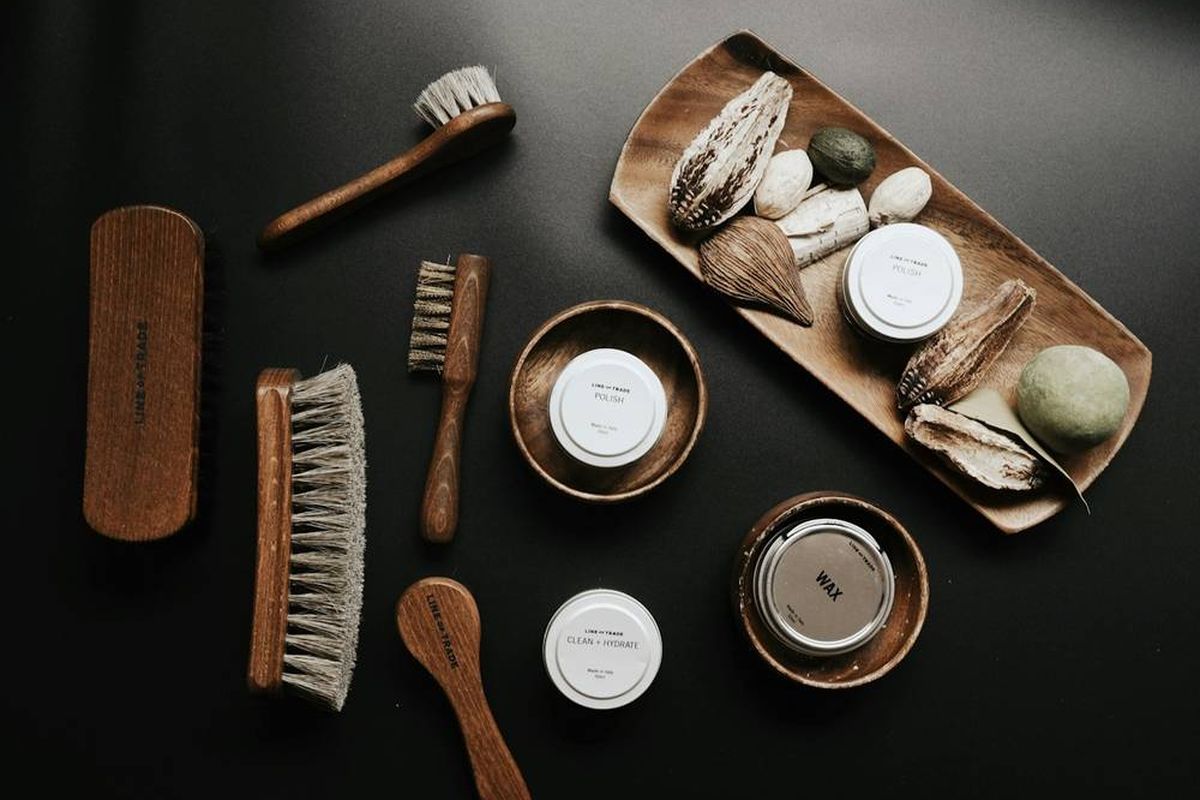
Good leather shoes can last for many years, but only if they are looked after. Leather absorbs moisture, loses its oils and, in a tropical climate, can grow mould within days if stored badly. Proper care takes a few minutes a week. This guide covers cleaning, conditioning, cream versus wax polish, humidity, rain and mould in Mauritius, and a simple year-round care schedule.
Why leather shoes need regular care
Leather is skin that has been tanned to make it stable and durable. During tanning and finishing, the leather is fed with oils and fats that keep its fibres supple. Every time you wear your shoes, those oils are slowly lost to heat, friction, dust and moisture. Without replacement, the fibres dry out and become brittle, and the deep creases that form across the top of the shoe where it flexes eventually crack. Once leather cracks, the damage cannot be fully reversed.
Dirt also causes harm: fine grit in the creases acts like sandpaper each time the shoe bends, and salt from sweat or sea air leaves white marks. In a humid climate, leather that stays damp invites mould. Regular care deals with all of these, and keeps shoes smart for office and formal wear.
How to clean and condition leather shoes
Cleaning is the foundation of every care routine. Polishing over dirt simply seals the dirt in and scratches the finish.
What you need
- A horsehair brush for removing dust (soft enough not to scratch, firm enough to reach into seams).
- A soft cotton cloth, such as an old T-shirt.
- Lukewarm water and, if needed, a dedicated leather cleaner or a few drops of mild saddle soap.
- Shoe trees, or crumpled paper, to hold the shape while you work.
Step-by-step cleaning
- Remove the laces so you can reach the tongue and eyelet area, where dirt collects.
- Insert shoe trees to smooth out creases and give you a firm surface.
- Brush off loose dust and dirt with the horsehair brush, paying attention to the welt, the seam where the upper meets the sole.
- Wipe with a barely damp cloth. Wring it out well; you want moisture, not water.
- Use cleaner only where needed. For stubborn marks or old polish build-up, apply a small amount of leather cleaner on a cloth in small circles, then wipe off.
- Let the shoes dry naturally for at least 20 to 30 minutes at room temperature before conditioning. Never use a hair dryer, heater or direct sunlight.
Conditioning: feeding the leather
A leather conditioner, sometimes called leather balm or leather lotion, replaces lost oils and keeps the fibres flexible. It is the step most people skip, and it is the one that most affects how long shoes last.
Apply a small amount, about the size of a pea for each shoe, with a soft cloth or your fingers, working it into the leather in small circular motions. Pay extra attention to the flex creases across the vamp and to any areas that look dull or dry. Let it absorb for 10 to 15 minutes, then buff off any excess with a clean cloth. A little goes a long way: too much conditioner can soften leather excessively, darken light colours and attract dust.
How often you condition depends on use and climate. For shoes worn several times a week, once a month is usually right. In the air-conditioned offices common in Port Louis and Ebene, leather can dry out faster than you expect, while shoes worn mostly outdoors in humid weather may need slightly less. Always test a new product on a small, hidden area first, especially on light tan or coloured leather.
Polishing: cream polish versus wax polish
Polish adds colour, covers scuffs and creates a protective surface. There are two main types, and they do different jobs. Most well-kept shoes benefit from both.
| Feature | Cream polish | Wax polish |
|---|---|---|
| Main purpose | Nourishes and restores colour | Protects and adds shine |
| Pigment | High; covers scuffs and faded areas well | Lower; mainly a surface layer |
| Shine | Soft, natural satin finish | From gloss to a high mirror shine |
| Water resistance | Low | Good; forms a barrier on the surface |
| Where to apply | The whole upper, including creases | Toe cap and heel counter; thin layers elsewhere |
| Best for | Regular maintenance, colour correction | Formal shoes, protection from rain and dust |
| Risk if overused | Minimal | Build-up that can crack in flex areas |
How to apply cream polish
Using a cloth or a small dauber brush, apply a thin layer of cream polish over the whole upper in small circles. Choose a colour that matches the leather or is slightly lighter; a neutral cream is useful when you are unsure. Leave it for five to ten minutes, then brush vigorously with a clean horsehair brush and finish with a soft cloth. Cream polish can be used every time you polish.
How to apply wax polish and create a shine
Wax polish is applied in very thin layers. Wrap a cotton cloth around two fingers, pick up a tiny amount of wax and work it into the toe cap in small circles. Let it dry for a few minutes, then add another thin layer. For a high shine on formal shoes, add a single drop of water to the cloth for the final layers and polish with very light pressure until the surface becomes glassy. Keep heavy wax off the flex creases across the top of the foot, where a thick layer will crack each time you walk.
Humidity and mould: leather care in a tropical climate
Mauritius has high humidity for much of the year, particularly during the hot, wet summer months from about November to April, and in areas of the central plateau such as Curepipe and Vacoas, where rain is frequent. Leather absorbs moisture from the air, and shoes kept in a closed wardrobe, a plastic bag or a box can develop a white or greenish fuzzy mould within days. Mould damages the leather surface, leaves stains and brings an unpleasant smell that is hard to remove.
How to prevent mould
- Let shoes breathe. Store them in an open rack or a ventilated cupboard, not sealed in plastic.
- Use cedar shoe trees, which absorb moisture from inside the shoe and have natural antifungal properties.
- Add moisture absorbers such as silica gel sachets or a dehumidifying container inside your wardrobe, and replace or dry them regularly.
- Air your wardrobe on dry, sunny days by opening the doors for a few hours.
- Never put away damp shoes, even if they are only damp from sweat after a long day.
- Keep leather conditioned. Well-maintained leather with a light protective finish resists moisture better than dry, neglected leather.
- Check stored shoes monthly, especially pairs you only wear for weddings or special occasions.
How to remove mould if it appears
- Take the shoes outside so spores do not spread indoors.
- Brush off the visible mould with a dedicated brush you can clean afterwards.
- Wipe the leather with a cloth dampened with a mixture of equal parts water and white vinegar, or with a suitable leather cleaner. Test on a hidden spot first.
- Wipe the inside of the shoe and the insole the same way.
- Let the shoes dry fully in the shade with good airflow, never in direct sun.
- Condition the leather once dry, since vinegar and cleaning will have removed some oils.
If mould has spread deep into the lining or left strong stains, a professional clean may be needed. Our shoe repair and restoration service can deep-clean, recolour and refresh shoes affected by mould or long storage.
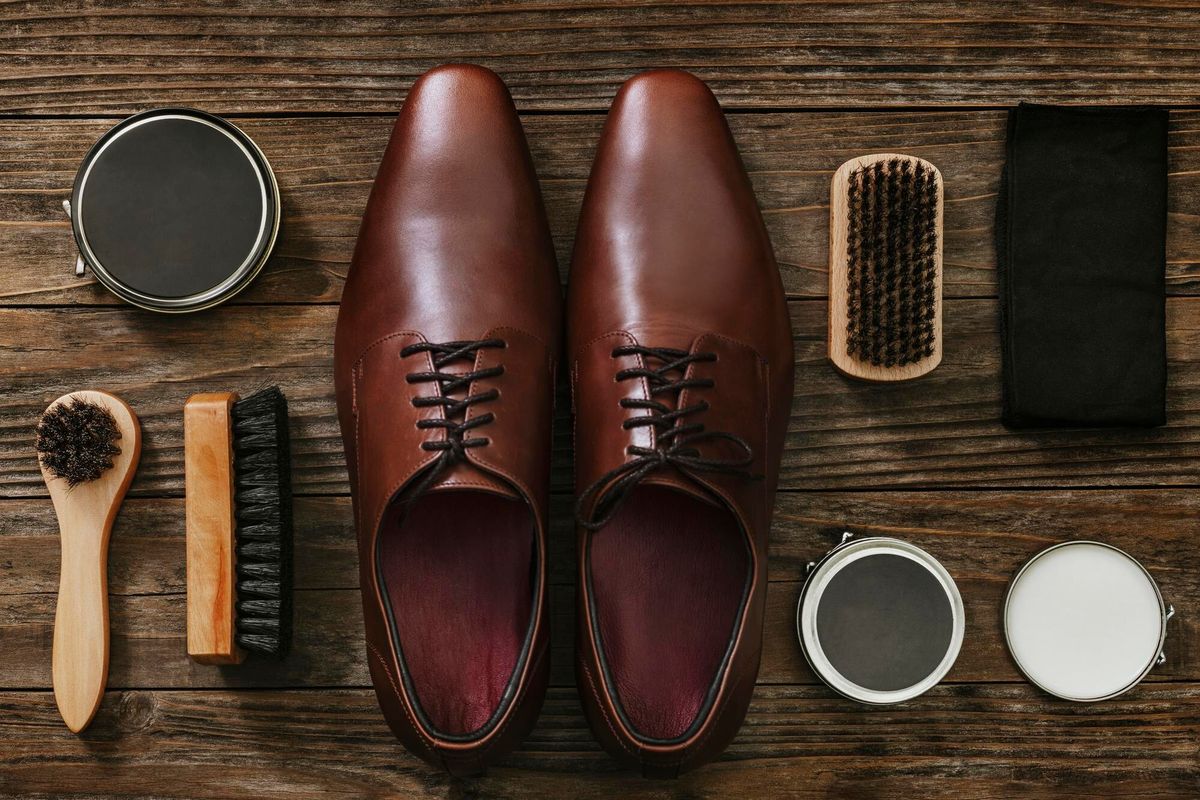
What to do when leather shoes get wet
Sudden downpours are part of life in Mauritius, and nobody can avoid them completely. Wet leather is not ruined, but how you dry it makes a big difference.
- Wipe off surface water and mud as soon as possible with a soft cloth.
- Remove the insoles if they are removable, and loosen the laces.
- Stuff the shoes with plain newspaper or paper towels, which absorb moisture and help keep the shape. Replace the paper every few hours while it is damp.
- Dry at room temperature, away from direct sun, heaters, hair dryers and ovens. Fast drying shrinks and cracks leather.
- Once almost dry, insert shoe trees to finish drying in the correct shape.
- Treat water or salt marks by wiping the whole panel evenly with a slightly damp cloth, so it dries uniformly without a line.
- Condition the leather once fully dry, usually after 24 to 48 hours.
Suede and nubuck versus smooth leather
Suede and nubuck are leathers with a brushed, velvety surface. They look and feel wonderful, but they are more sensitive to water, oil and stains, and they need a different approach from smooth leather.
- No polish or cream. Traditional polish and conditioners will flatten and darken the nap. Use products made specifically for suede.
- Brush regularly with a suede brush, always in one direction, to lift the nap and remove dust.
- Use a suede eraser for marks and shiny patches.
- Protect before wearing with a suede protector spray, applied in a well-ventilated area and reapplied every few weeks during the rainy season.
- If suede gets wet, blot gently, stuff with paper and let it dry naturally, then brush to restore the texture.
Patent leather, with its glossy coated surface, needs only a wipe with a damp cloth and occasionally a dedicated patent cleaner. It does not absorb conditioner, but it can crack in extreme heat, so keep it out of hot cars.
Storage, shoe trees and rotation
Shoe trees
Unvarnished cedar shoe trees are one of the best investments you can make for leather shoes. They absorb moisture and odour from the lining, keep the leather stretched as it dries so creases are smoother, and help the shoe hold its shape. Insert them as soon as you take your shoes off, while the leather is still warm and slightly damp from wear. Choose trees that match your shoe size; a tree that is too large stretches the leather, and one that is too small does little.
Rotation
The inside of a shoe absorbs sweat throughout the day, and in hot weather that can be a considerable amount. Leather needs about 24 hours to dry out completely. Wearing the same pair every day means it never fully dries, which weakens the lining, encourages odour and bacteria, and shortens its life. Rotating between at least two pairs of work shoes, and ideally three, can more than double the life of each pair.
Long-term storage
Clean and condition shoes before storing them for a season. Keep them with shoe trees in breathable cotton shoe bags, not plastic, in a cool, dry and ventilated place. Avoid garages, car boots and areas close to a bathroom where humidity is high.
A simple leather shoe care schedule
Use this schedule as a practical guide for shoes worn regularly. Adjust it upward if you walk a lot outdoors or wear your shoes daily.
| When | Task | Time needed |
|---|---|---|
| After every wear | Quick brush, insert cedar shoe trees, let shoes rest 24 hours | 1 minute |
| Weekly | Wipe with a damp cloth, light cream polish on worn areas, buff | 10 minutes |
| Monthly | Full clean, condition, cream polish, optional wax on toe and heel | 20 to 30 minutes |
| Every 2 to 3 months | Strip old wax build-up, re-condition, check stitching and heels | 30 to 40 minutes |
| Rainy season | Protect with wax or spray, check wardrobe for damp, refresh moisture absorbers | As needed |
| Once a year or when worn | Professional check of soles, heels and stitching; resole if needed | At a repairer |
Common leather care mistakes
- Drying wet shoes with heat, which shrinks and cracks leather.
- Storing shoes in plastic bags or sealed boxes, which traps humidity and encourages mould.
- Applying polish over dirt, which scratches the surface and seals in grime.
- Using too much product, especially wax on flex areas.
- Using household cleaners, alcohol wipes or harsh detergents, which strip oils and colour.
- Waiting until the heels are worn right down before repairing them.
Keep your leather shoes at their best with Nylex
Caring for leather shoes is simple once it becomes a habit: brush after wear, use shoe trees, rotate your pairs, condition regularly, polish sensibly and keep humidity under control. In a tropical climate those last points matter even more, and they are what separates shoes that last one season from shoes that last for years.
Nylex makes and supplies leather footwear in Port Louis, from men's formal shoes and loafers to women's flats, heels and sandals. If a favourite pair needs new heels, a resole or a deep clean after mould, our repair and restoration team can help. Visit us at 16 J Charle Oliver, Port Louis, or get in touch for advice on caring for your shoes.
Frequently asked questions

Shoemakers and fitting specialists at our Port Louis workshop, sharing practical advice from years of making and fitting footwear in Mauritius.